The Difference Between a Pretty Room and a Cohesive Room
There’s a difference between a room that looks pretty… and a home that feels intentional.
A pretty room can stop you in your tracks on Pinterest.
A cohesive room makes you exhale when you walk through your front door.
And honestly? Most homeowners don’t realize there’s a difference until they start decorating their own home.
Because designing one beautiful room is relatively easy.
Creating a home where every space flows together naturally, comfortably, and timelessly? That’s where thoughtful design comes in.
A Pretty Room Focuses on the Individual Space
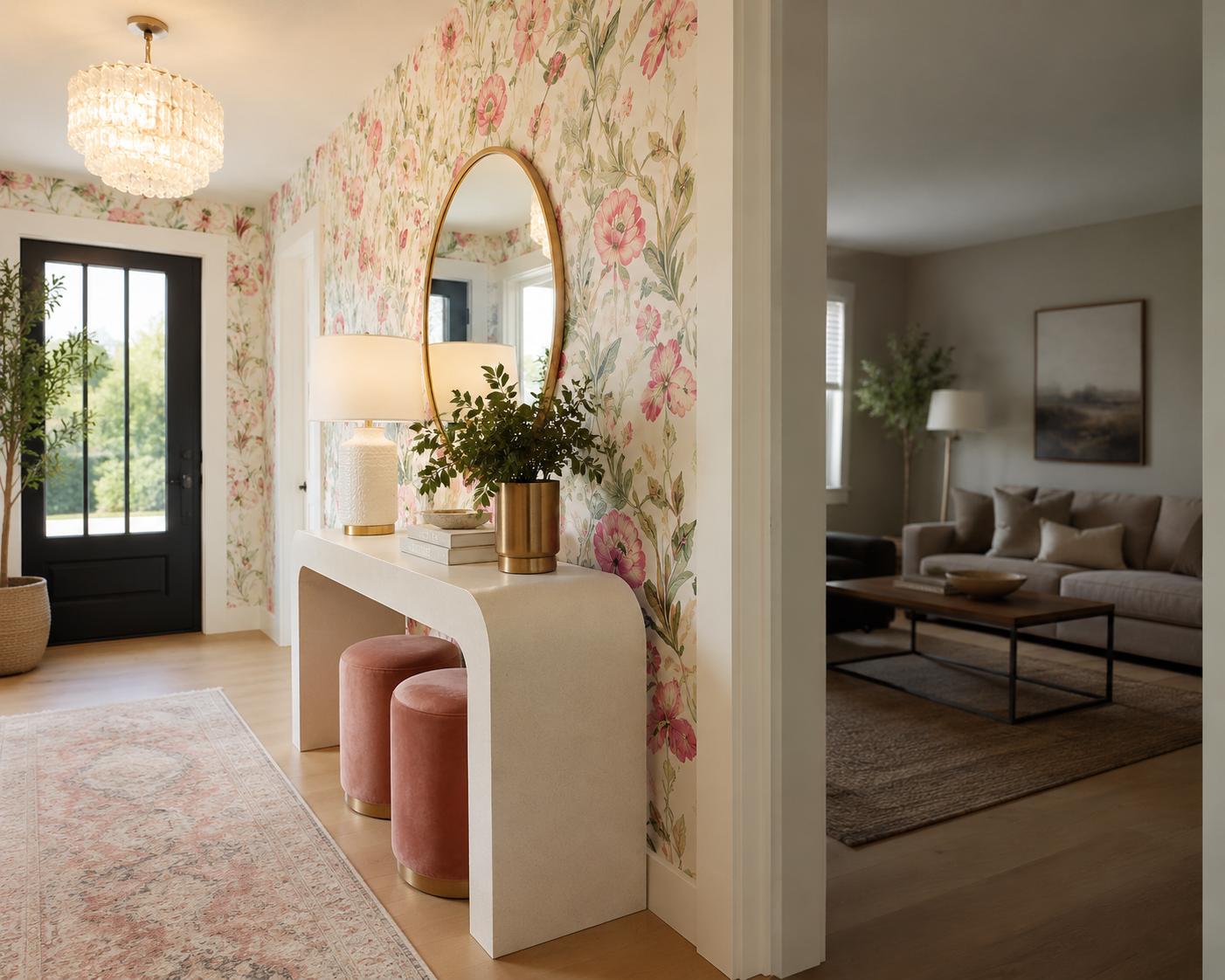
A pretty room is usually designed in isolation.
The paint color looks beautiful.
The furniture is trendy.
The lighting is stylish.
The accessories are layered perfectly.
On its own, the room photographs beautifully.
But once you step into the next space, something starts to feel disconnected.
The undertones shift.
The mood changes completely.
The flooring, finishes, or colors suddenly compete instead of complementing one another.
Nothing is necessarily wrong — but the home starts to feel visually choppy instead of calm and connected.
This is one of the biggest reasons homeowners feel frustrated after spending thousands of dollars on furniture, paint, and décor… yet their home still doesn’t feel “finished.”
A Cohesive Room Considers the Entire Home
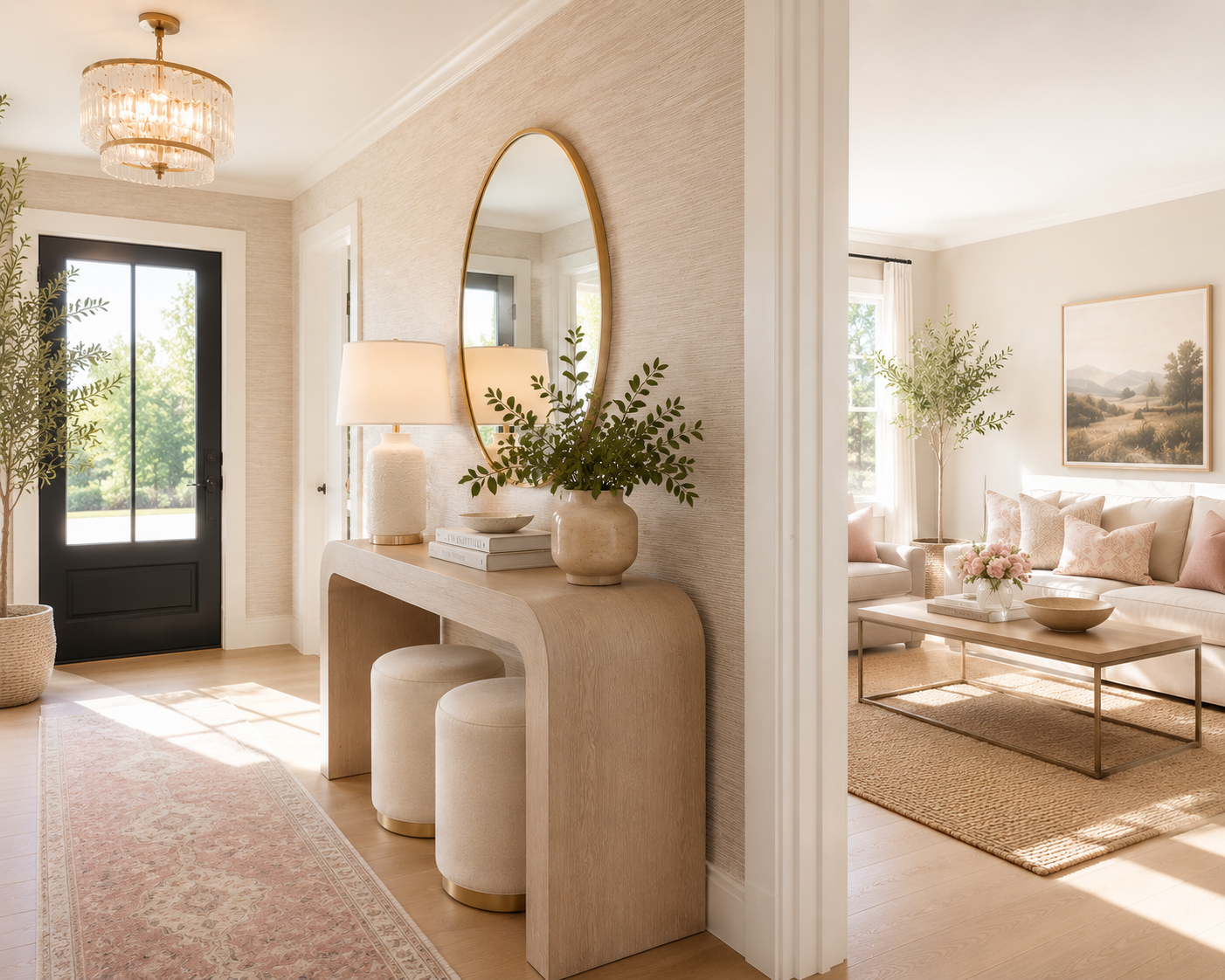
A cohesive room isn’t just designed to look good by itself.
It’s designed to support the flow of the entire home.
That doesn’t mean every room has to match. In fact, cohesive homes usually feel more layered and interesting because they have variation without chaos.
The difference is that cohesive homes share a common thread.
That thread might be:
Repeating undertones
Consistent warmth or coolness
Similar wood tones
Balanced contrast
Intentional color relationships
Repeated materials or finishes
A consistent overall mood
When done correctly, every room feels connected without feeling identical.
The home begins to tell one complete story instead of feeling like a collection of separate ideas.
The “Pinterest Effect” is Why So Many Homes Feel Disconnected
One of the hardest parts about decorating today is the endless inspiration online.
You save a warm organic living room.
Then a cool modern kitchen.
Then a moody English-style bathroom.
Then a bright coastal bedroom.
Individually, every room is beautiful.
But together? They often clash because they were never designed to coexist under the same roof.
This is where homeowners unintentionally create homes full of “pretty rooms” that don’t actually relate to one another.
A cohesive home requires zooming out and asking:
How does this room connect to the spaces beside it?
Do these undertones coordinate?
Does this color palette support the overall feeling of the home?
Will this still feel timeless five years from now?
Cohesion Creates Calm
One of the biggest misconceptions in design is that cohesive homes are boring.
In reality, cohesive homes usually feel more elevated.
Why?
Because your eye can move naturally throughout the home without constantly adjusting to competing styles, colors, and finishes.
Cohesion creates:
Visual balance
Comfort
Warmth
Flow
Simplicity
Timelessness
It’s often the difference between a home that feels professionally designed… and a home that feels pieced together over time.
Paint Color Plays a Bigger Role Than Most People Realize
Paint is often the foundation of cohesion.
And this is where many homeowners accidentally lose the flow of their home.
A single paint color might look beautiful on a swatch — but if the undertones don’t coordinate with your flooring, fixed finishes, lighting, or adjacent spaces, the entire home can begin to feel disconnected.
This is why whole-home color palettes matter so much.
Instead of selecting colors room-by-room, cohesive palettes consider:
Natural light exposure
Flooring tones
Cabinet finishes
Fixed materials
Undertones
Sight lines between rooms
Overall mood of the home
The goal isn’t to make every room identical.
The goal is to make every room feel like it belongs.
Cohesive Homes Feel Better Over Time
Trends come and go.
But homes rooted in cohesion tend to age beautifully because they’re built on intentionality instead of impulse decisions.
They feel settled.
Collected.
Comfortable.
Timeless.
And perhaps most importantly — they feel personal.
Not because every room is dramatic or trendy… but because the entire home works together harmoniously.
Final Thoughts
Anyone can create a pretty room.
But creating a cohesive home requires stepping back and seeing the bigger picture.
It’s not about perfection.
It’s not about matching everything.
And it’s definitely not about making your home feel overly designed.
It’s about creating flow, balance, and connection from one space to the next — so your home doesn’t just look beautiful in photos, but feels beautiful to live in every single day.