Why “Matching Everything” Is Ruining Your Home Design
There was a time when “matching” was considered the goal.
Matching wood tones. Matching furniture sets. Matching metal finishes. Matching paint colors from room to room.
And while it may feel safe, perfectly matching a home often creates the exact opposite of what homeowners actually want:
A home that feels flat, staged, sterile, and lacking personality.
The most beautiful homes don’t feel matched.
They feel layered, collected, balanced, and intentional.
At Eastman Design Co., one of the biggest design shifts we help homeowners make is learning the difference between a matching home and a cohesive home.
And they are not the same thing.
Matching Creates Sameness — Not Depth
When every finish, color, texture, and furniture piece is identical, your eye has nowhere to rest.
Everything blends together.
Instead of creating warmth and interest, the home begins to feel overly controlled and one-dimensional.
This often shows up as:
Matching bedroom furniture sets
The exact same wood tone throughout the house
Every wall painted the same gray
Identical décor in every room
All black finishes or all gold finishes everywhere
Trend-based purchases that don’t connect to the rest of the home
Ironically, trying too hard to make everything “go together” often removes the very thing that makes a home feel elevated: Contrast.
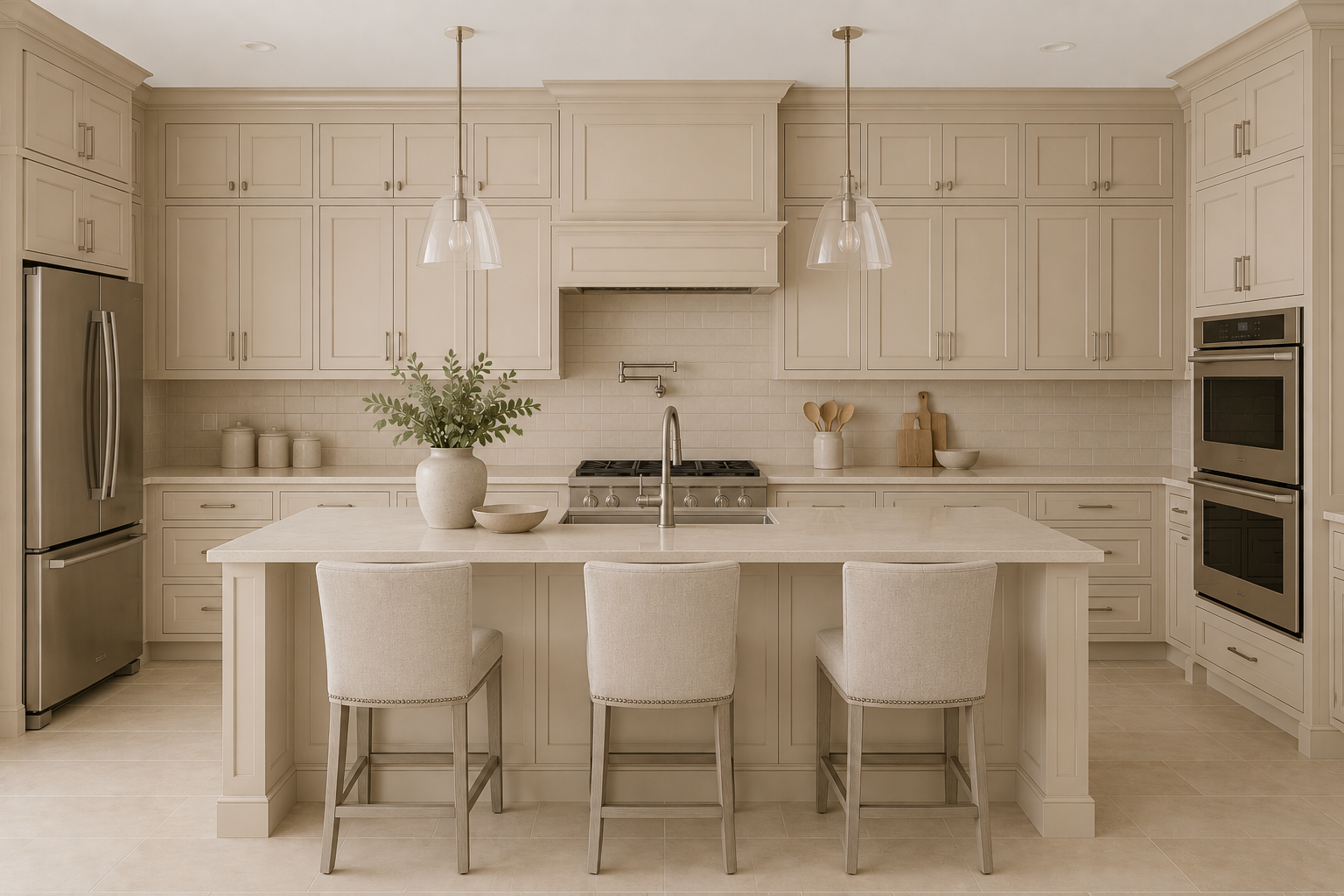
Cohesive Homes Use Relationship — Not Repetition
A cohesive home is built on connection, not duplication.
The goal is not for every room to look identical.
The goal is for every room to feel related.
That distinction changes everything.
A well-designed home allows for:
Variation
Depth
Texture
Contrast
Mood shifts
Personality
Visual movement
While still maintaining overall flow.
Think of it this way:
A cohesive home feels like chapters in the same book.
A matching home feels like the same page repeated over and over again.
The Problem With Over-Matching Paint Colors
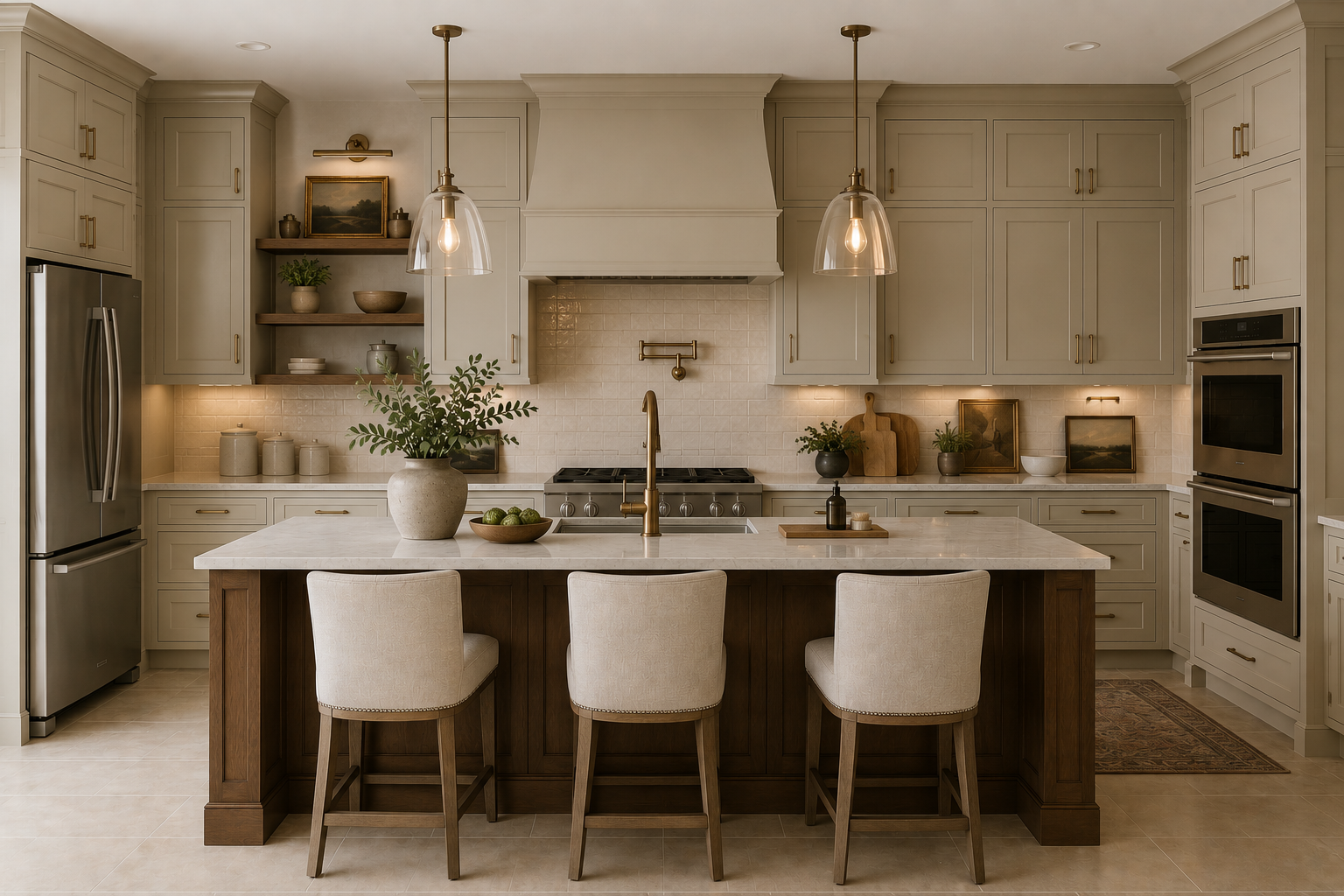
One of the biggest mistakes homeowners make is assuming every room needs the exact same paint color to feel cohesive.
In reality, whole-home flow comes from:
Coordinating undertones
Balanced contrast
Consistent warmth or coolness
Intentional transitions
Repeating tones — not duplicating colors
You can absolutely use:
A soft warm white in one room
A muted greige in another
A moody blue office
A green-gray laundry room
…and still have the home feel beautifully connected.
The secret is understanding how colors relate to one another.
Not forcing them to be identical.
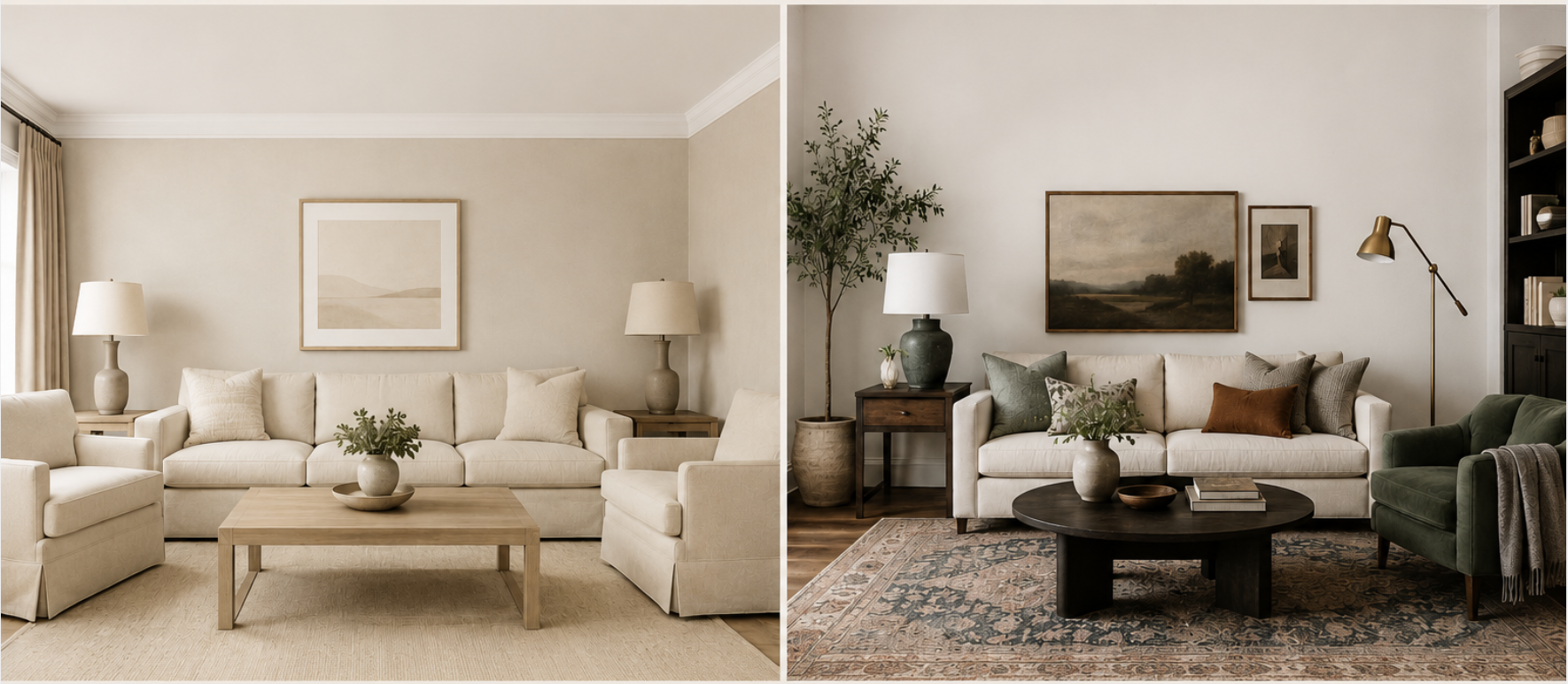
Designer Homes Feel Collected — Not Purchased All at Once
One reason professionally designed homes feel timeless is because they rarely rely on perfect matching.
Instead, designers intentionally mix:
Wood tones
Textiles
Metals
Vintage and new pieces
Warm and cool balance
Soft and structured materials
That layering creates richness.
It makes a home feel lived in, personal, and enduring instead of overly trend-driven.
A room becomes far more interesting when:
The oak floors don’t perfectly match the coffee table
The brass lighting has patina
The linen sofa contrasts the darker wood tones
The vintage rug introduces subtle variation
The paint palette flows without feeling repetitive
These differences are what create soul.
Visual Balance Matters More Than Matching
Great design is about balance.
Not perfection.
A cohesive home carefully distributes:
Color weight
Contrast
Texture
Warmth
Light and dark moments
Throughout the home.
That balance creates comfort and calm without making the home feel boring.
This is why some homes feel instantly inviting the moment you walk in.
Nothing is screaming for attention, but everything quietly works together.
What You Should Focus on Instead
Rather than asking:
“Does this match?”
Start asking:
Does this coordinate?
Does this relate to the surrounding spaces?
Does this support the feeling I want in the home?
Does this add depth or flatten the room?
Does this create balance?
Does this feel timeless?
Those questions lead to a far more intentional home.
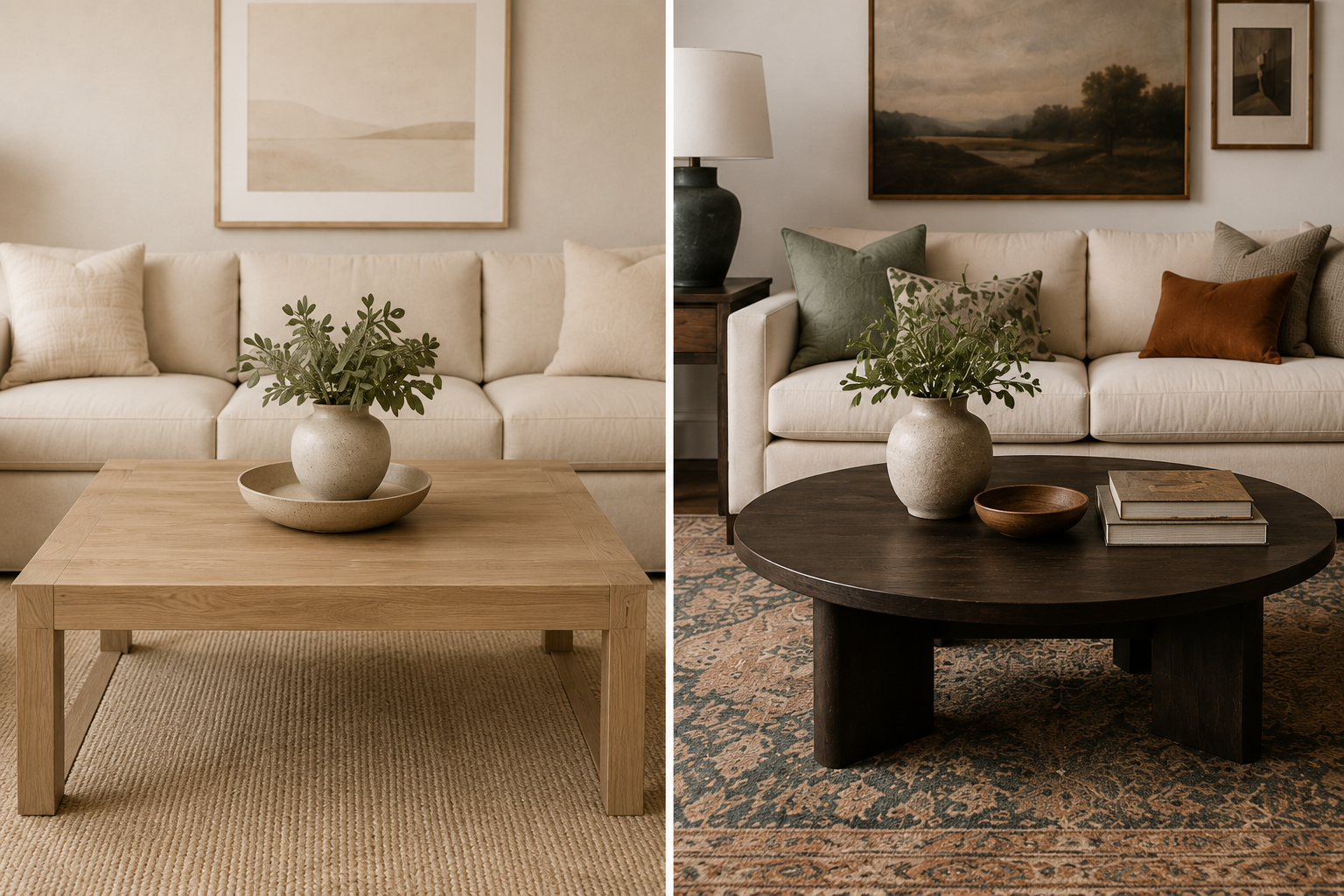
The Homes That Feel the Most Expensive Rarely Match Perfectly
The most elevated interiors are layered thoughtfully over time.
They mix:
Soft neutrals with moodier moments
Warm woods with painted finishes
Organic textures with tailored details
Contrast with restraint
They prioritize flow over perfection.
And that’s exactly what makes them feel authentic.
Final Thoughts
A beautifully designed home should feel cohesive — not copied and pasted.
Matching everything may feel safe in the moment, but it often strips a home of warmth, dimension, and personality.
True cohesion comes from intentional relationships between colors, materials, textures, and tones.
Not from making everything exactly the same.
At Eastman Design Co., we believe the best homes feel layered, balanced, collected, and deeply personal.
Because timeless design is never about perfect matching.
It’s about thoughtful connection.