Your House Is Allowed to Change Its Mind
The nursery becomes a bedroom.
The playroom becomes an office.
The formal dining room becomes the place where everyone does homework.
The guest room becomes something else entirely.
Homes change because people change. Our needs change.
And good design should leave room for that.
You Don't Have to Solve the Next Twenty Years
There's a tendency during renovation to try to anticipate every possible version of the future.
But designing exclusively around what might happen can prevent you from creating a home that works beautifully right now. This includes your vision for your own home, or purposely creating your home for resale. You lose all the fun in creating a space that works for you.
Instead, create a strong foundation.
Good flooring.
Useful storage.
Thoughtful lighting.
Flexible furniture.
A cohesive palette.
Then allow the details to evolve.
Buy Some Things for a Season
Not every purchase needs to become an heirloom.
Some furniture simply needs to survive the toddler years.
A bedroom paint color may belong to this particular chapter.
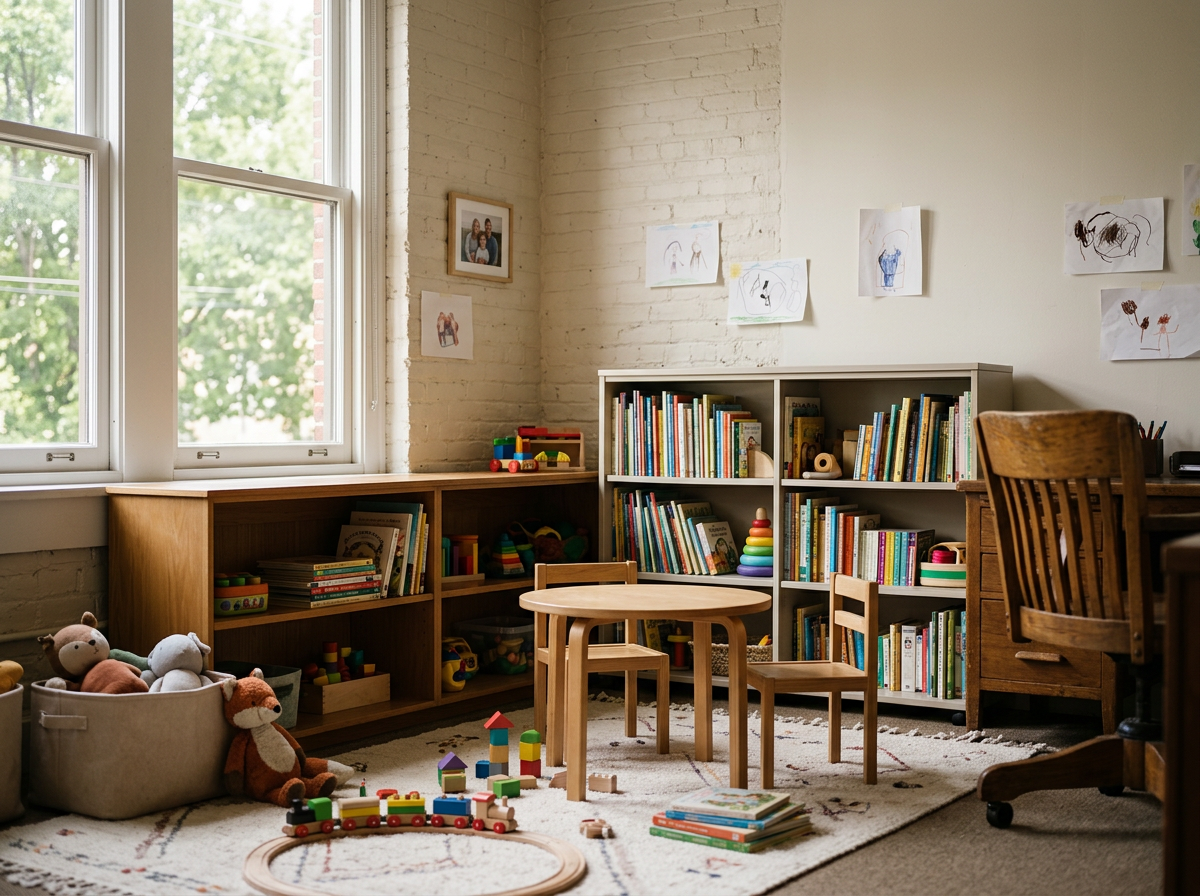
A playroom rug doesn't need to work when the room eventually becomes an office.
There is freedom in acknowledging that. And making those fun, temporary spaces just that: FUN!
Invest in What Can Travel
When you do want longevity, look for pieces that aren't dependent on one specific room.
A beautiful wooden chest can begin in an entry and eventually move to a bedroom.
An antique table can become a desk.
A favorite chair can travel throughout the house.
Artwork rarely cares what room it's in.
These are the pieces that help a home evolve without requiring you to start over.
Designing for longevity doesn't mean freezing your house at one moment in time.
It means creating enough continuity that the house can change without losing itself.
Your home isn't a finished project.
It's an ongoing one.
And that's part of what makes it yours.