What I Notice First When a Room Feels “Off”
Sometimes you walk into a room and immediately know something isn't working.
But identifying what isn't working can be surprisingly difficult.
When that happens, I don't begin with accessories.
I look at the relationships between what is permanent and what is temporary.
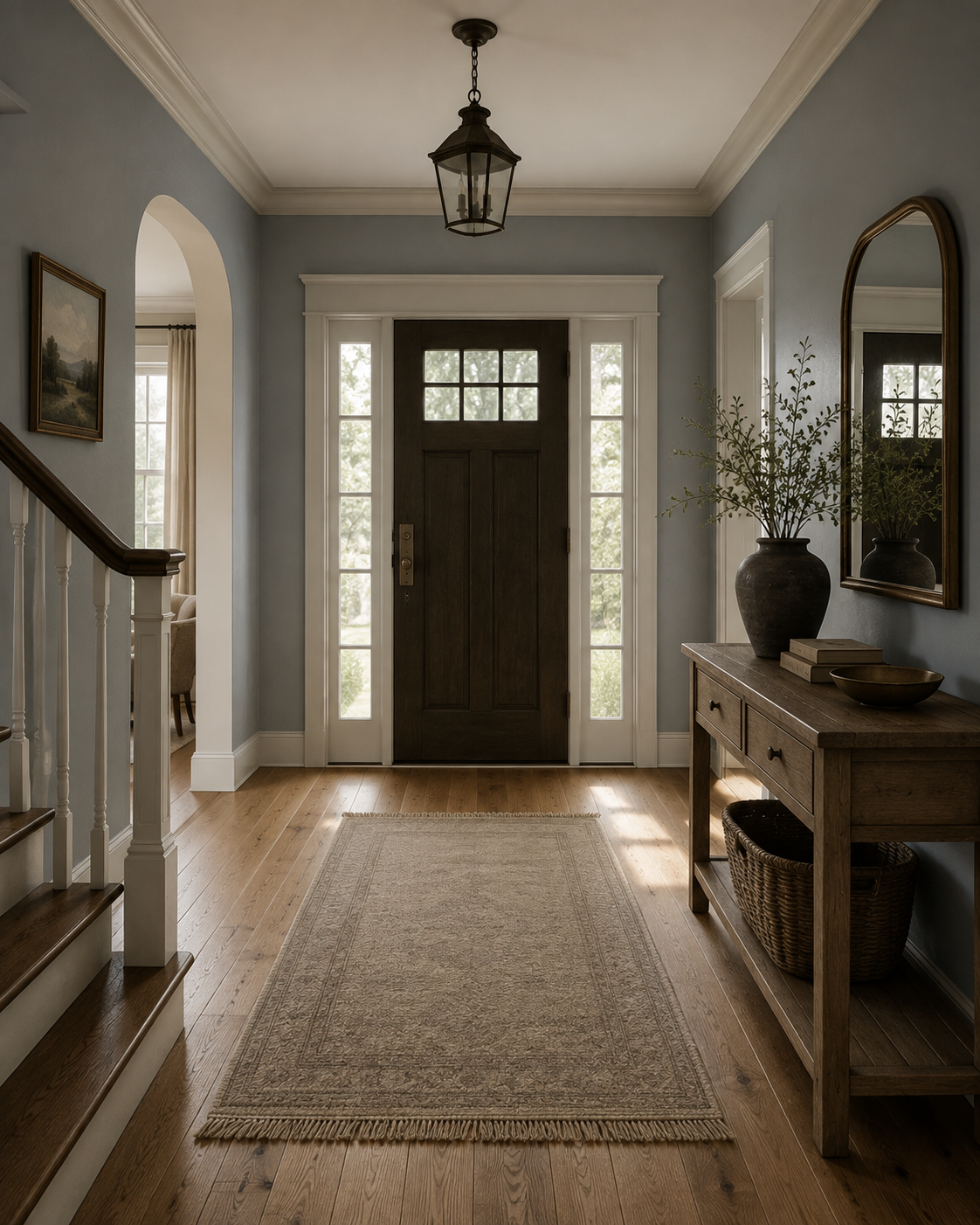
First: The Floor and Walls
Do their undertones cooperate?
A warm floor paired with an incompatible cool wall color can create tension throughout the entire room.
If the foundation isn't working, decorating over it rarely solves the problem.
Second: Scale
Is the rug large enough?
Does the furniture fill the room appropriately?
Are all the accessories tiny?
Is one enormous piece overpowering everything else?
Scale can make perfectly beautiful objects look wrong.
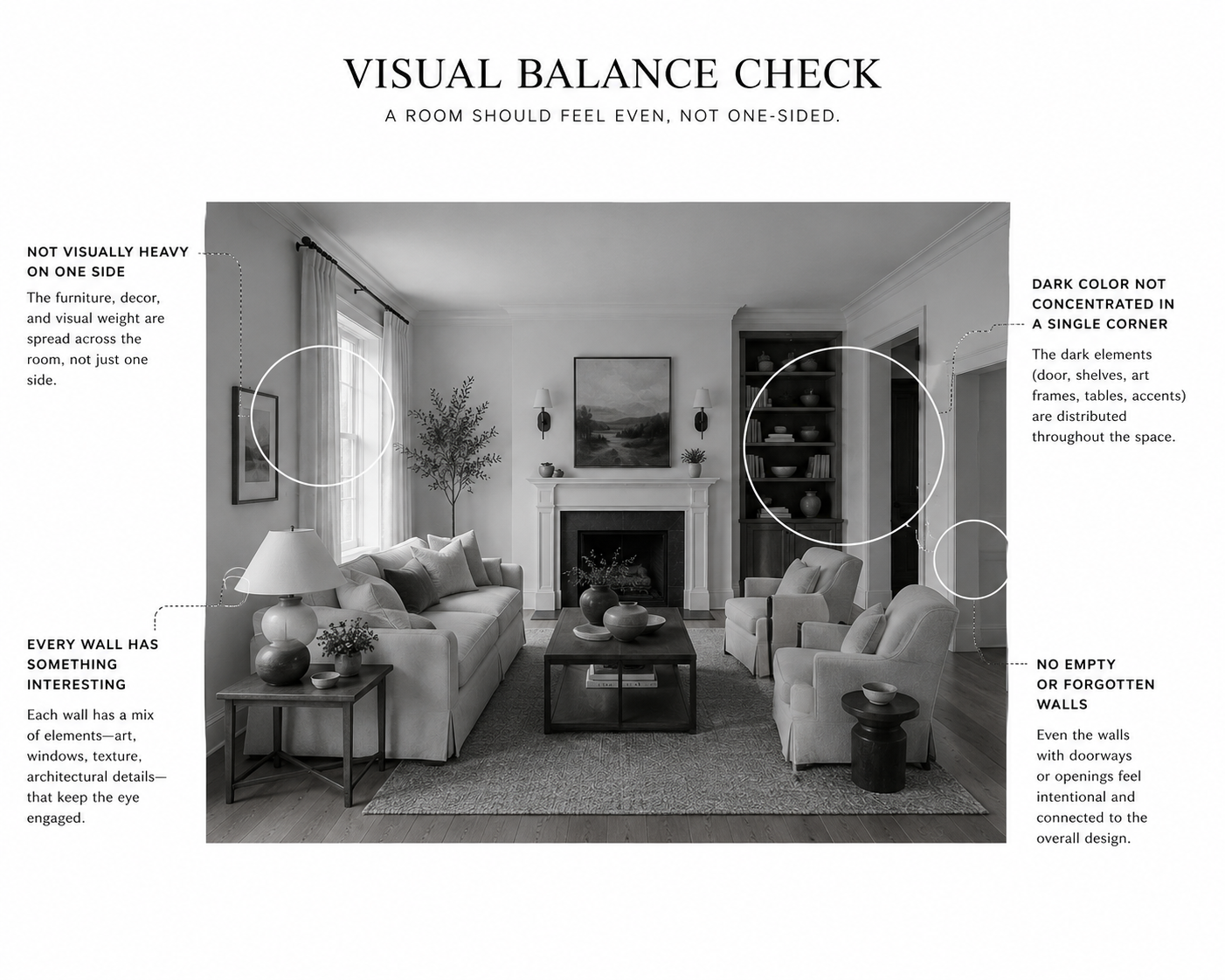
Third: Visual Weight
Imagine the room in black and white.
Is everything visually heavy on one side?
Is all the dark color concentrated in a single corner?
Does one wall contain everything interesting while another feels completely empty?
Balance doesn't require symmetry, but the room should feel grounded.
Fourth: Repetition
Look for the elements that appear only once.
One black object.
One blue pillow.
One brass fixture.
One piece of dark wood.
Sometimes repeating that element elsewhere is all that's needed to make the original choice feel intentional.
Last: The Accessories
Only after those larger relationships are working do I worry about styling.
A different vase can't correct the wrong rug size.
More pillows won't fix incompatible undertones.
And another basket won't solve a furniture layout problem.
When a room feels wrong, start big.
The smallest details are rarely responsible for the biggest problems.