The Power of Repetition in Design
When people walk into a beautifully designed home, they often struggle to explain why it feels so good.
They notice the paint color. They compliment the furniture. They admire the lighting.
But what they're actually responding to is something much quieter.
Repetition.
Repetition is one of the most powerful tools in interior design, and it's often the difference between a room that feels randomly decorated and a home that feels thoughtfully designed.
What Repetition Really Means
In design, repetition isn't about buying matching furniture or using the same color everywhere.
It's about intentionally repeating certain elements throughout a space so the eye can recognize patterns and create a sense of order.
Those repeated elements might be:
Similar wood tones
Consistent metal finishes
Reoccurring shapes
Repeated colors
Comparable textures
Architectural details
Fabric patterns
These small visual echoes help connect individual rooms into a larger story.
Without repetition, every room feels like a separate decision.
With repetition, the entire home begins to feel intentional.
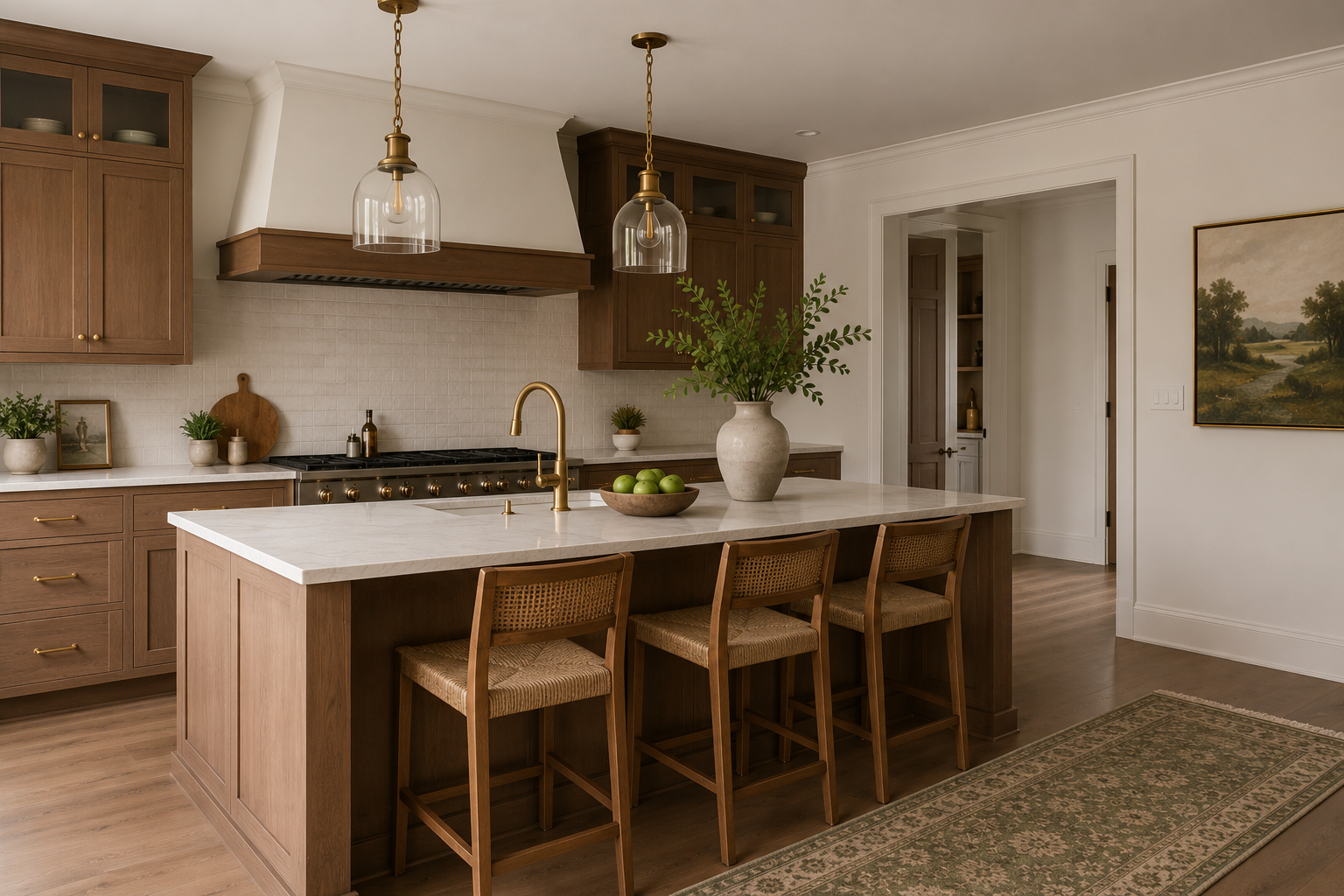
three different rooms that share the same wood tone, metal finish, and accent color—demonstrating repetition without looking identical.
Why Our Brains Love It
Humans naturally look for patterns.
Our brains are constantly trying to organize information and make sense of our surroundings. When a space contains repeated elements, it feels easier to understand.
That feeling of understanding often translates into comfort.
It's why a well-designed home can feel calming even when you can't identify exactly why.
The eye notices the same warm brass finish appearing in multiple rooms.
It recognizes a recurring curve in furniture silhouettes.
It picks up on familiar colors woven throughout the house.
The result is a sense of flow that feels effortless.
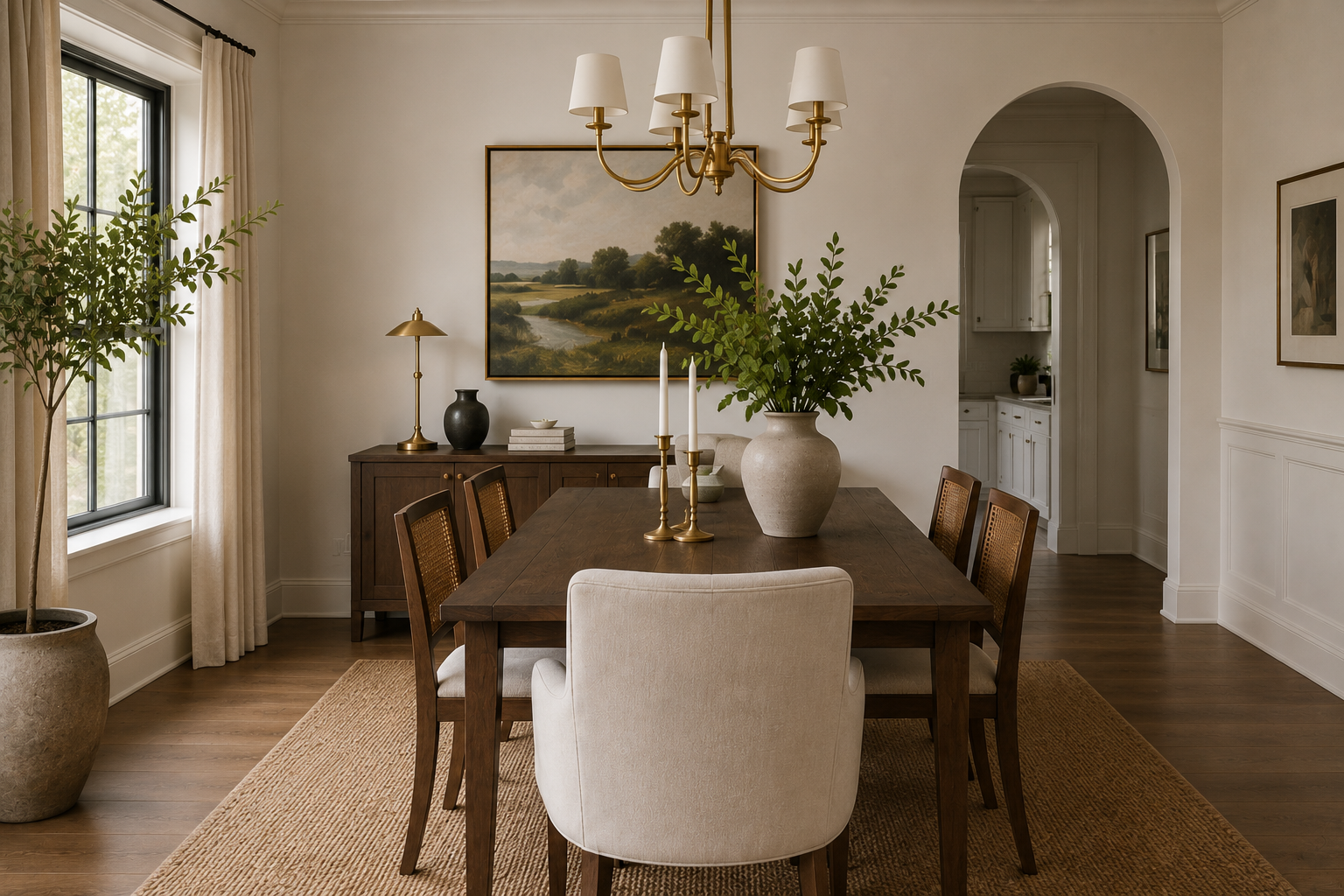
three different rooms that share the same wood tone, metal finish, and accent color—demonstrating repetition without looking identical.
Repetition Creates Cohesion
One of the biggest misconceptions in home design is that every room should look completely different.
In reality, the most beautiful homes usually have a common thread running through them.
A designer may introduce different colors, furniture styles, and decorative elements from room to room, but there is almost always a system underneath.
Perhaps the same warm walnut tone appears in the kitchen, dining room, and office.
Maybe a soft green shows up in artwork, textiles, cabinetry, and accessories throughout the home.
Or perhaps black accents are repeated through lighting, hardware, mirrors, and furniture.
These repeated elements quietly connect spaces together, even when the rooms themselves serve very different purposes.
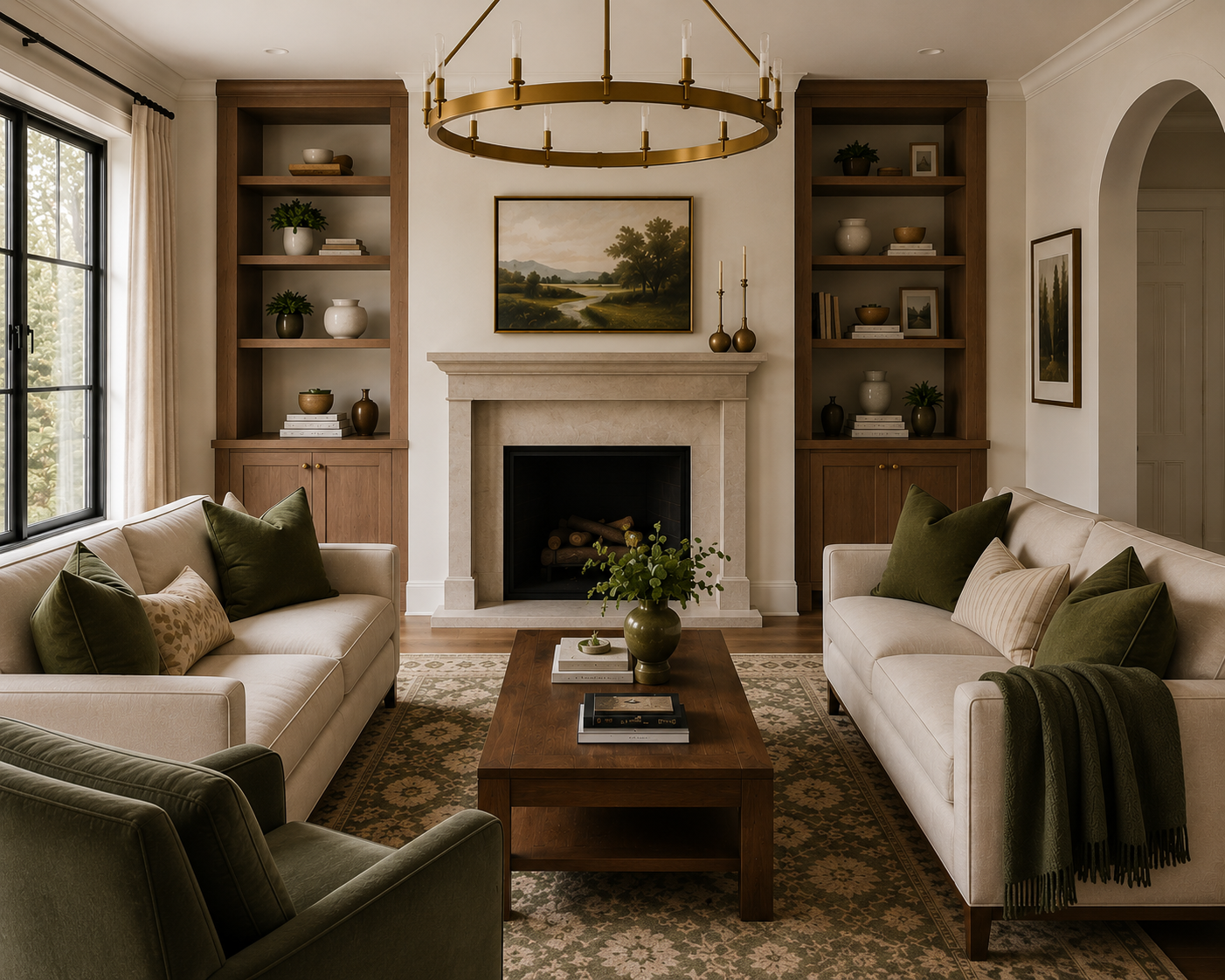
three different rooms that share the same wood tone, metal finish, and accent color—demonstrating repetition without looking identical.
The Secret to a Home That Feels Finished
Many homeowners spend years collecting beautiful pieces, only to feel like their home never quite comes together.
Often, the missing ingredient isn't another purchase.
It's repetition.
Instead of adding more, consider looking for opportunities to reinforce what already exists.
Can you repeat a color from one room in another?
Can you carry a wood tone throughout the house?
Can you introduce a similar shape, texture, or finish in multiple spaces?
The goal isn't uniformity.
The goal is familiarity.
When design elements appear intentionally throughout a home, every room begins to feel connected to the next.
The Eastman Design Co. Approach
When we build a whole-home palette, we're not simply choosing paint colors.
We're creating a framework for repetition.
Color becomes one layer of the story, but so do flooring selections, cabinet finishes, hardware, textiles, and architectural details.
The result is a home that feels cohesive without feeling repetitive.
Because the most beautiful homes aren't built room by room.
They're built through thoughtful connections that guide you from one space to the next.
And often, those connections begin with the simple power of repetition.