The Biggest Mistake Homeowners Make When Choosing Paint Colors
There’s a moment in almost every home project where someone stands in the paint aisle, staring at hundreds of swatches, trying to find the one. It feels exciting—hopeful, even. This is the moment your home starts to become something new.
But this is also where the biggest mistake happens.
Choosing Paint Colors One Room at a Time
Most homeowners choose paint colors in isolation.
They pick a beautiful greige for the living room.
A soft blue for the bedroom.
A crisp white for the kitchen.
Individually, each color works. Each one is pretty. Each one feels safe.
But together?
They don’t tell the same story.
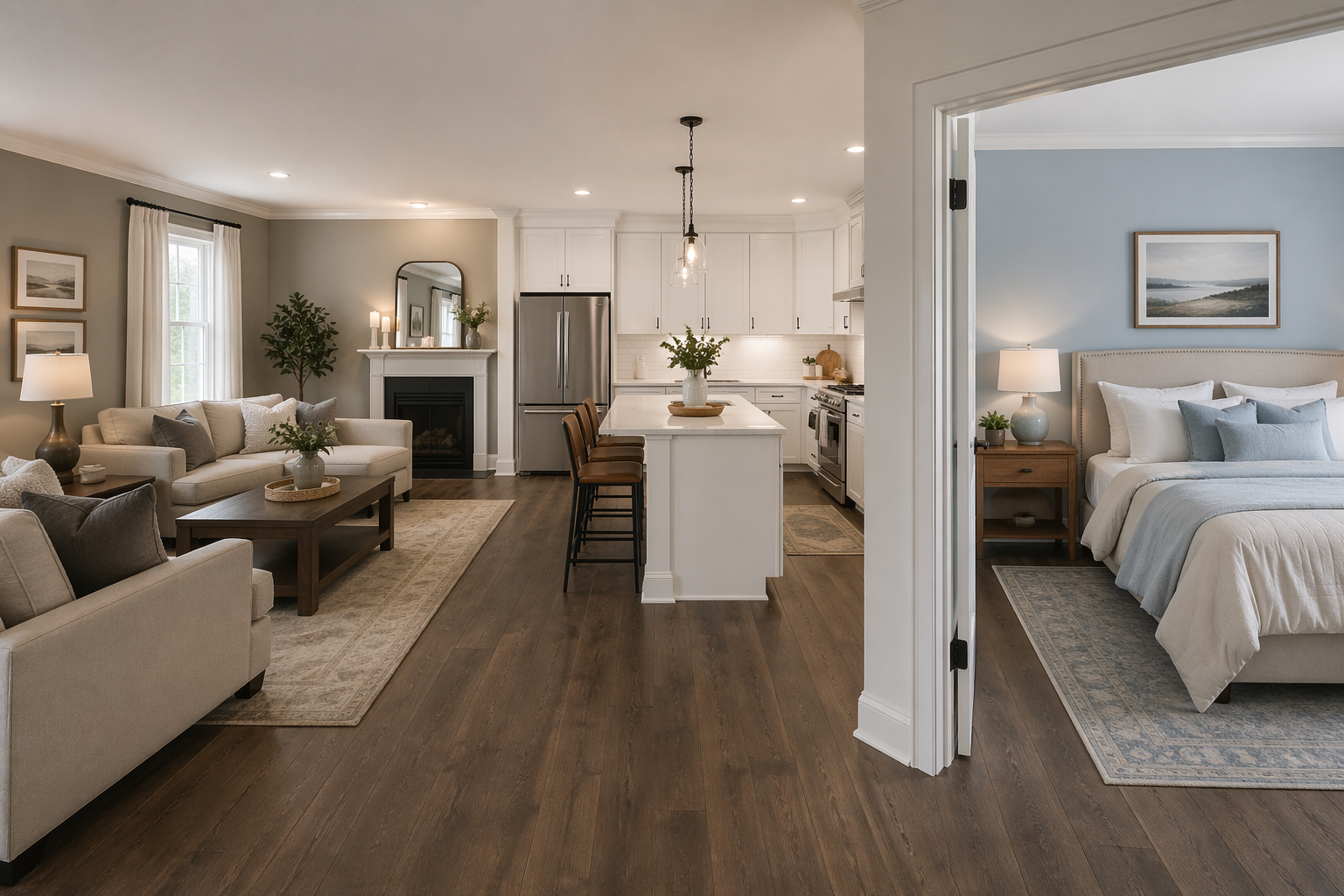
Beautiful, but not cohesive.
Why This Creates a Disconnected Home
A home should feel like it flows—like each space naturally leads into the next. When colors are chosen without considering the full picture, the result is subtle but powerful:
Rooms feel visually “cut off” from each other
Hallways become awkward transition spaces
Lighting shifts make colors read completely differently
The home lacks a clear identity
It’s not that the colors are wrong.
It’s that they were never meant to live together.
The Real Goal: Cohesion, Not Perfection
The goal isn’t to find the perfect color for each room.
The goal is to build a palette that works as a whole.
This is where design shifts from decorating… to curating.
A well-built palette considers:
Undertones (warm vs. cool consistency)
Lighting throughout the entire home
Fixed elements (flooring, cabinetry, tile)
How colors transition from room to room
When this is done right, something changes:
You stop noticing the paint… and start feeling the home.
What a Cohesive Home Actually Feels Like
A cohesive color palette creates:
Calm — nothing feels jarring or out of place
Flow — your eye moves naturally from space to space
Confidence — everything looks intentional
Timelessness — the home doesn’t feel trendy, it feels designed
This is the difference between a home that looks “nice”… and one that feels finished.
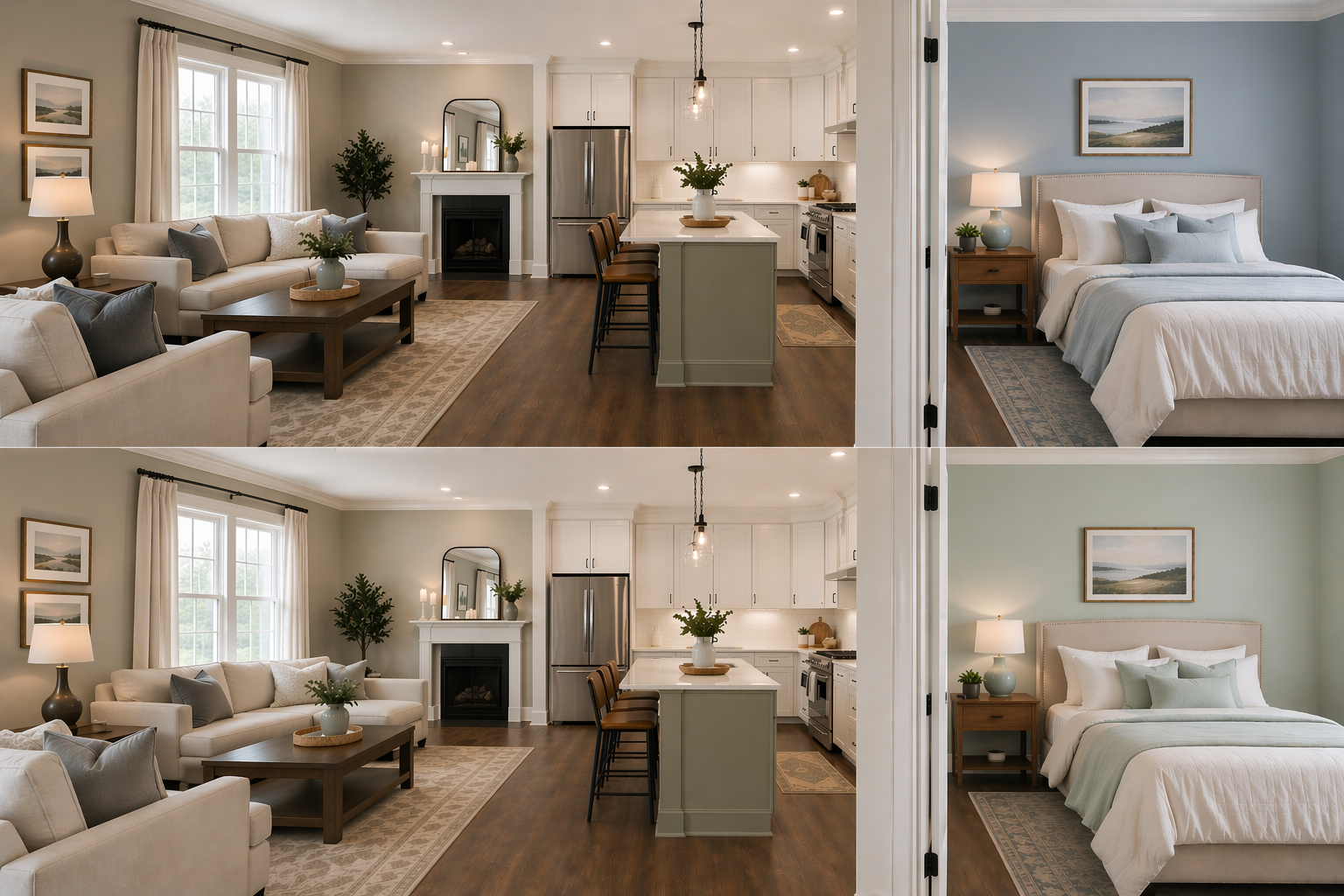
By aligning the color of the bedroom wall to the rest of the home, changing from a soft blue to a soft green, the space feels 100% more welcoming and intentional.
The Fix: Start With a Whole-Home Vision
Before picking a single paint color, step back and ask:
What do I want my home to feel like as a whole?
From there, build a palette—not just a room.
Think in layers:
1–2 main neutrals that anchor the home
2–3 supporting tones that create variation
1–2 accents that add depth and personality
Every room can still feel unique—but it will belong to the same story.
Final Thought
Paint is one of the most powerful tools in your home—but only when it’s used with intention.
The biggest mistake isn’t choosing the wrong color.
It’s choosing colors without connection.
Because a well-built palette isn’t just about what looks good on the wall—
it’s the foundation of a cohesive home.