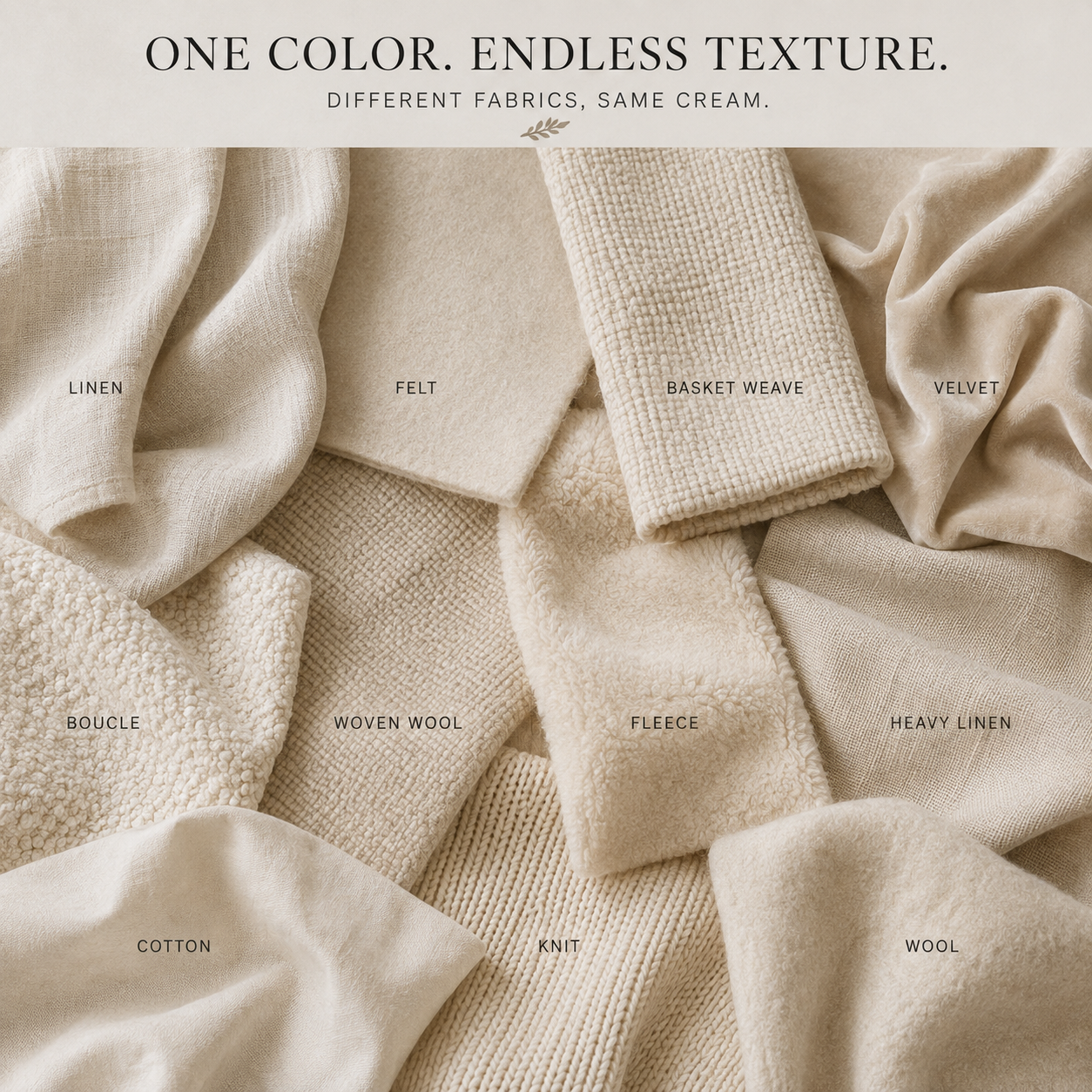
Maybe Your Room Doesn’t Need More Color. Maybe It Needs More Texture.
The walls are right.
The furniture works.
The palette feels cohesive.
But somehow the room still looks...flat.
Before adding another color, look at the textures.
A Neutral Room Still Needs Variation
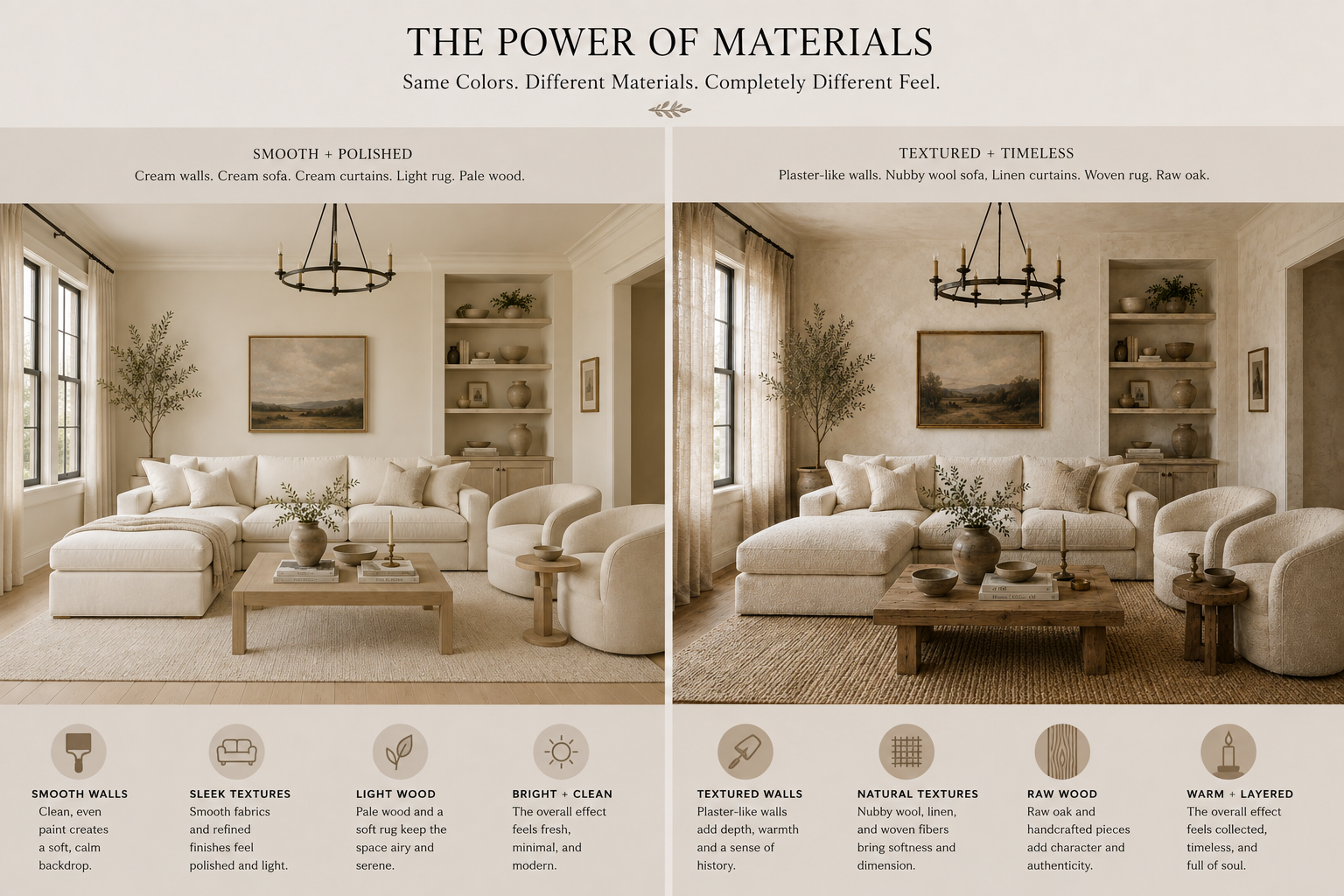
Imagine a room containing:
Cream walls.
Cream sofa.
Cream curtains.
Light rug.
Pale wood.
It could be beautiful.
Or it could feel completely lifeless.
Now keep the exact same colors and change the materials:
Plaster-like walls.
Washed linen curtains.
Nubby wool upholstery.
Woven rug.
Raw oak.
Handmade pottery.
Aged metal.
Suddenly the palette has depth.
Nothing became more colorful.
It became more tactile.
Mix the Finish, Not Just the Material
Even repeating materials can work when their finishes vary.
Smooth wood beside rough wood.
Polished stone beside honed stone.
New brass beside aged brass.
Fine linen beside chunky wool.
The subtle differences give the eye something to explore.
Texture Is Especially Important in Quiet Palettes
The fewer colors you use, the harder your materials need to work.
That's why some of the most beautiful neutral interiors are actually incredibly layered.
They aren't simple at all.
They're filled with variation—we just notice it more slowly.
So if a room feels unfinished but you don't want another color, don't force one into the palette.
Add something woven.
Something weathered.
Something soft.
Something irregular.
Something with a little age.
Sometimes color isn't what's missing.
Sometimes the room simply needs something you want to reach out and touch.