Five Things I’d Decide Before Buying a Single Piece of Furniture
Starting a room with furniture shopping is tempting.
It's also one of the easiest ways to end up with a collection of individually beautiful things that don't quite work together.
Before adding anything to the cart, establish these five things.
1. The Floor Plan
Know what actually fits.
Measure the room, doors, windows, walkways, fireplace, built-ins, and any architectural features that affect furniture placement (and write it all down so you do not have to redo the measurements every time you buy a new piece.)
Then decide where the largest pieces need to live.
Scale problems are much harder to fix after the sofa arrives.
2. The Color Direction
You don't need every paint color selected yet, but you should understand the general direction.
Warm and earthy?
Cool and quiet?
Light with stronger accents?
Deep and moody?
This immediately eliminates furniture that belongs to a completely different color story.
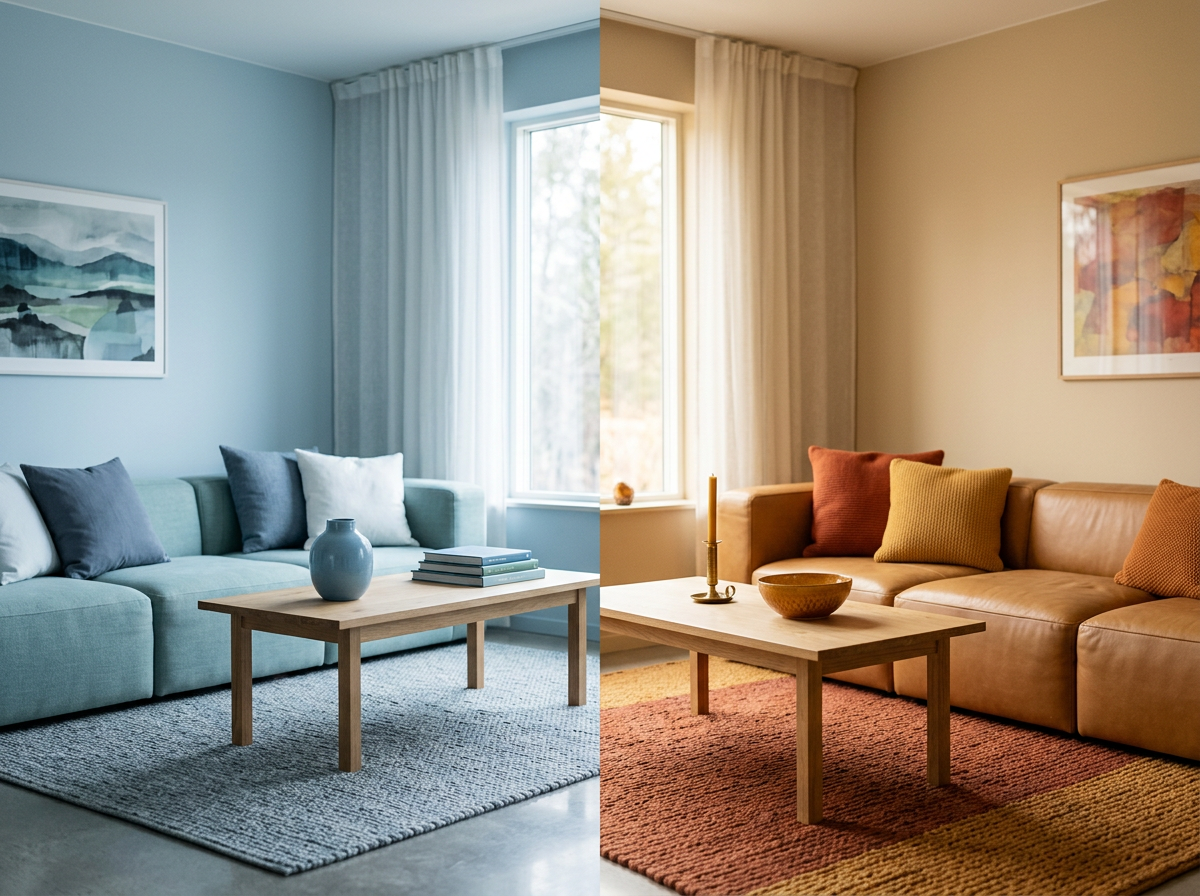
Cool and quiet
vs,
Warm and earthy
3. Your Existing Materials
Look at the things you're keeping.
Flooring is particularly important.
So are countertops, fireplace stone, cabinetry, rugs, and significant pieces of furniture.
Your new purchases need to have a conversation with what's already there.
It’s ok to get rid of pieces you’re not in love with and replace them with pieces you can’t live without.
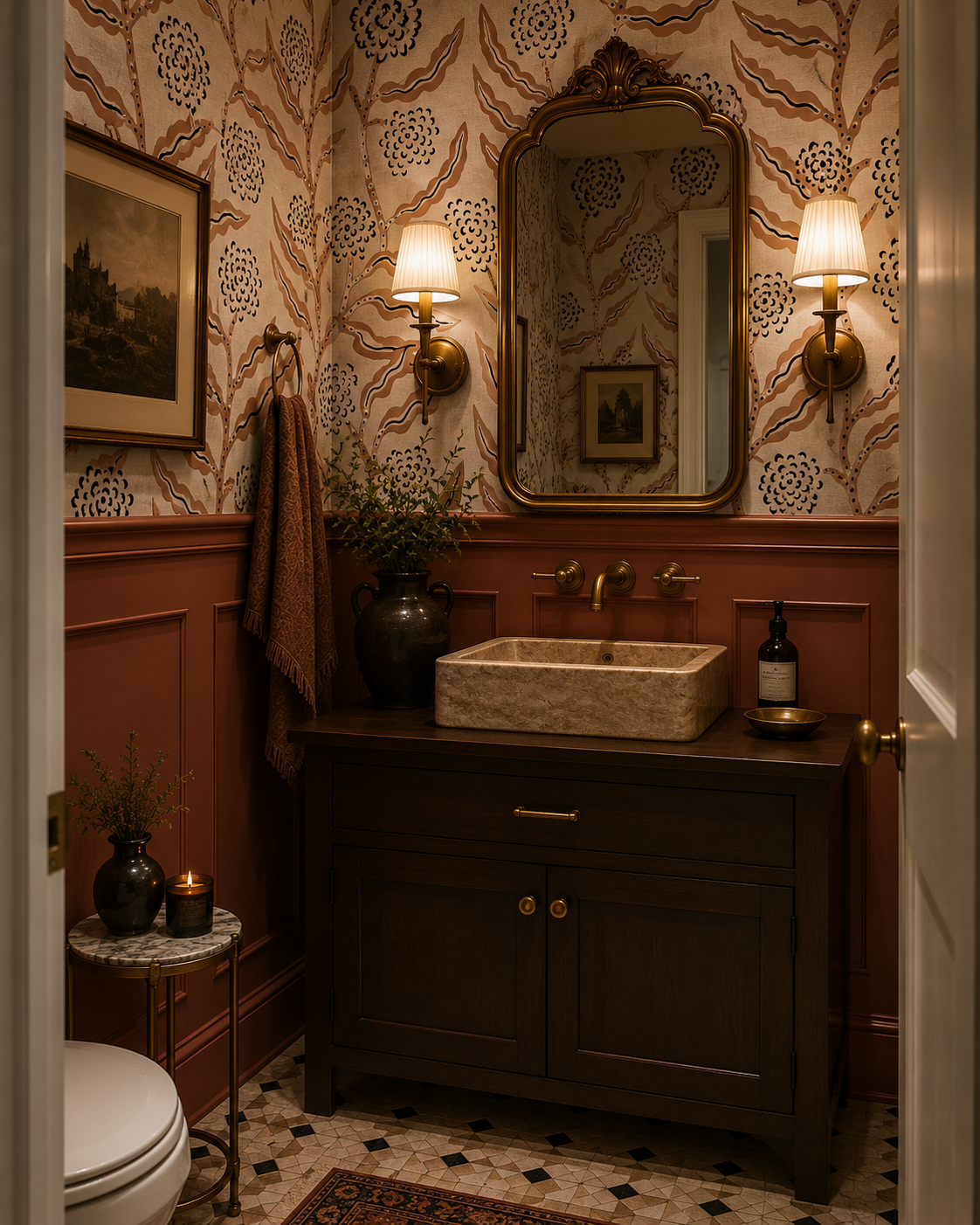
4. Where You Want Contrast
A room doesn't need ten competing focal points.
Decide where the strongest moments will happen.
If you're using dramatic wallpaper, perhaps the furniture should be quieter.
If the furniture is mostly neutral, maybe artwork and textiles can carry more personality.
5. How the Room Needs to Work
Finally—and most important—consider real life.
Do you entertain?
Do children use the room?
Do pets sleep on the sofa?
Do you need hidden storage?
Does someone need a reading light?
Would an enormous coffee table look wonderful but constantly interrupt the walkway?
The most beautiful option isn't necessarily the best option.
Once these decisions are made, shopping becomes surprisingly simple.
Instead of asking, Do I like this?
You can ask:
Does this belong in the room I'm building?